
Winter mornings in Sydney bring heavier cooler feelings than usual. Strong winds, certain changing weather, and heavy rainy conditions can put some extra pressure on the system of the TV antenna. Corrosion, loose fittings, water entering or the damaged cable connections can also gradually weaken the TV reception and also turn a basic small maintenance into an expensive repairing one.
A simple and professional TV antenna maintenance check during and before the winter can help you to identify the problems earlier and keep the system working with reliability.
1. Check the TV antenna after a strong wind
Sydney’s strong winds and storms can loosen or move an antenna, specifically on any exposed roofs. Check the titled components, loose mounting hardware, visible movement, and damaged brackets. If your antenna no longer points correctly towards the broadcast reception or transmission area that may become unstable.
Please note, never climb onto the roof by yourself. A professional technician can manage the concern of safety for inspection, installation and realignment of the antenna if it is required.
2. Look for rust and corrosion
Moisture and rain can actually accelerate corrosion around the antenna brackets, elements, mounting hardware, and connectors. Also, rust may weaken the overall installations and eventually affect the signal performance. During the inspection, look for:
- Loose or damaged brackets
- Corrosion or rust on the metal components
- Water-damaged connectors
- Cracked connectors
- Signs which reflect a protective fitting have already deteriorated
So, early antenna maintenance can help you to prevent any minor corrosion from any larger repairing issue.
3. Inspect the antenna cable
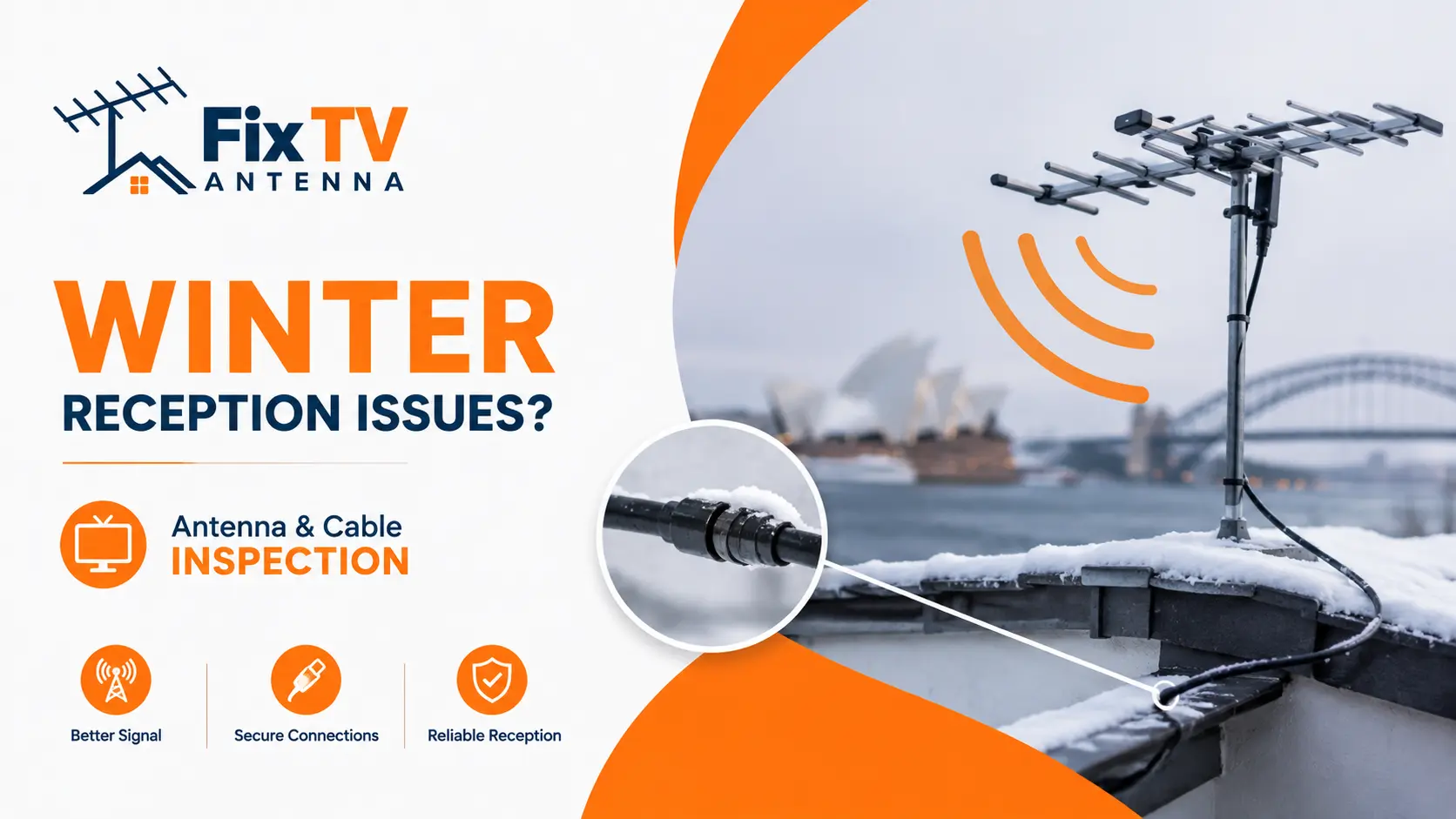
The coaxial cable is one of the important parts of the TV reception system. Check for the visible cuts, loose connections, cracked or crushed sections, or any deterioration caused from the external weather exposure are necessary.
Water entering often damages the cable connections and contributes to pixelation, intermittent reception, and finally signal loss. If any damaged cable has been noticed, then an immediate professional repair of the TV signals may be required rather than simply replacing the TV.
4. Test the TV signal
Winter is an iconic season to check the TV receptions performance and consistency at work.
Watch for:
- Missing channels
- Freezing or pixelation
- Intermittent reception
- Weak signals
- Completely losing signals
These are mostly the signs of cabling, antenna alignment, signal disruption or connection problems. For that, professional signal testing can help to identify the actual cause before unnecessary equipment replacement.
5. Arrange for preventive maintenance
If the antenna has been installed for many years or you may have experienced any recent reception problems, then go for a professional inspection before the weather causes further damage.
The Fix TV Antenna provides repairing TV antenna, TV signal repairs, and professional antenna installation services across the Sydney homeowners. Our expert technicians will inspect the equipment, diagnose the reception problems and recommend practical solutions depending on your priority.
Reason behind Sydney’s trusted TV antenna repair services and installations
Whether you need routine TV antenna maintenance, repairs, or a new installation, Fix TV Antenna will deliver reliable, fast services to you across Sydney. The facilities are:
- Fully insured and licensed
- Same day-based services
- Australian made antennas
- Google rating is 5.0★
- $130 off on antenna installation
- Pensioner discounts
- Fastest 90 minutes-based responses
- Locally owned services
All of these will help to fix your worries by ensuring fast services and affordability.
Final thought
If you’re worried about the winter causing antenna issues and after effects. Then, don’t wait for the weather to expose any small to large antenna problems. Call Fix TV Antenna on 1300 582 482 or else request your problem related quotation today. And keep your Sydney antenna ready for the next upcoming wind, rain, and changing weather conditions.