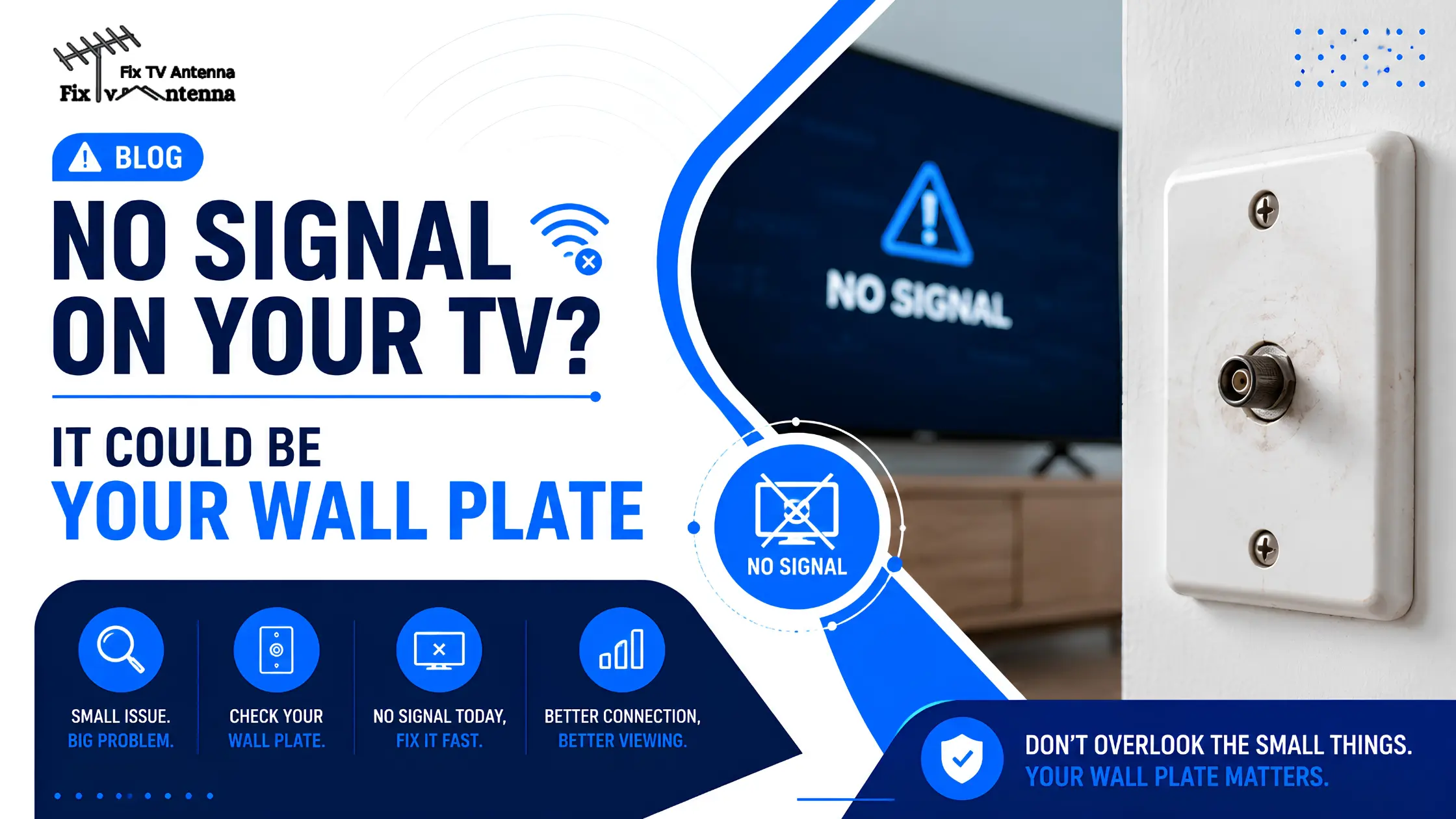
A sudden TV no signal message can be frustrating, especially when everything seemed to be working perfectly just moments earlier. Many Australian homeowners assume the rooftop antenna has failed or the television itself is faulty. However, one of the most commonly overlooked causes of reception problems is the TV wall plate.
Over the years, I’ve attended countless call-outs where the issue wasn’t the antenna, amplifier, or television at all. Instead, the fault was hiding behind the wall plate that connects the home’s antenna system to the TV. A loose connection, corrosion, or worn connector can be enough to cause complete signal loss.
Can a Faulty Wall Plate Cause a TV No Signal?
Yes. A faulty TV wall plate can interrupt the signal travelling from your antenna system to the television. Loose internal connections, corrosion, damaged coaxial fittings, or poor installation can all cause signal loss, resulting in pixelation, missing channels, or a complete “No Signal” message.
What Does “No Signal” Mean on a TV?
When your television displays “No Signal”, it means it cannot detect a usable broadcast signal from the selected source.
For free-to-air television, the signal travels from the rooftop antenna through cables, splitters, wall plates, and finally into the TV. If the signal is interrupted at any point, the television may display:
- No Signal
- Weak Signal
- No Channels Found
- Signal Lost
While antenna faults are a common cause, internal connection problems within the home can produce the same symptoms.
Common Causes of TV No Signal Issues
Several faults can trigger a no signal on TV message:
-
Antenna Problems
Storm damage, strong winds, corrosion, or ageing antenna components can reduce signal reception.
-
Antenna Cable Problems
Damaged coaxial cable, water ingress, or loose fittings can weaken signal quality and cause dropouts.
-
Amplifier or Booster Faults
Many Australian homes use signal boosters or masthead amplifiers. If the power supply fails, reception can disappear completely.
-
Incorrect TV Settings
The TV may have accidentally been switched to HDMI, AV, or another input instead of antenna mode.
-
Faulty Wall Plate
A damaged antenna wall socket can interrupt the signal before it even reaches the television.
What Is a TV Wall Plate?
A TV wall plate is the antenna outlet mounted on the wall where your TV cable plugs in.
Its job is simple: provide a connection point between the home’s antenna system and your television.
Although it looks like a basic fitting, the wall plate contains connections that must remain secure to maintain reliable digital TV reception. If those connections become loose or damaged, signal quality can quickly deteriorate.
How a Faulty Wall Plate Can Cause Signal Loss
Wall plates experience years of use and can eventually develop faults.
-
Loose Internal Connections
The cable attached behind the wall plate can loosen over time. Even a slight connection issue may create significant reception problems.
-
Corrosion
Moisture inside wall cavities can cause corrosion on connectors, reducing signal flow.
-
Damaged Connectors
The coaxial connector can become worn or damaged through repeated use.
-
Wear and Tear
Older wall plates often develop poor internal contact points, especially in homes where cables are regularly disconnected and reconnected.
-
Poor Installation
Incorrect cable termination is another common issue. Poor workmanship can cause ongoing reception faults from the day the wall plate is installed.
Technician Tip: If channels return when you move the antenna cable connected to the wall plate, there’s a strong chance the wall plate or its internal connection is causing the fault.
Signs Your Wall Plate May Be the Problem
Watch for these common warning signs:
- Signal returns when the cable is moved
- Pixelation occurs before complete signal loss
- Channels disappear intermittently
- The wall socket feels loose
- One TV outlet works while another does not
These symptoms often point directly to a faulty wall plate rather than a rooftop antenna issue.
How to Check If Your Wall Plate Is Faulty
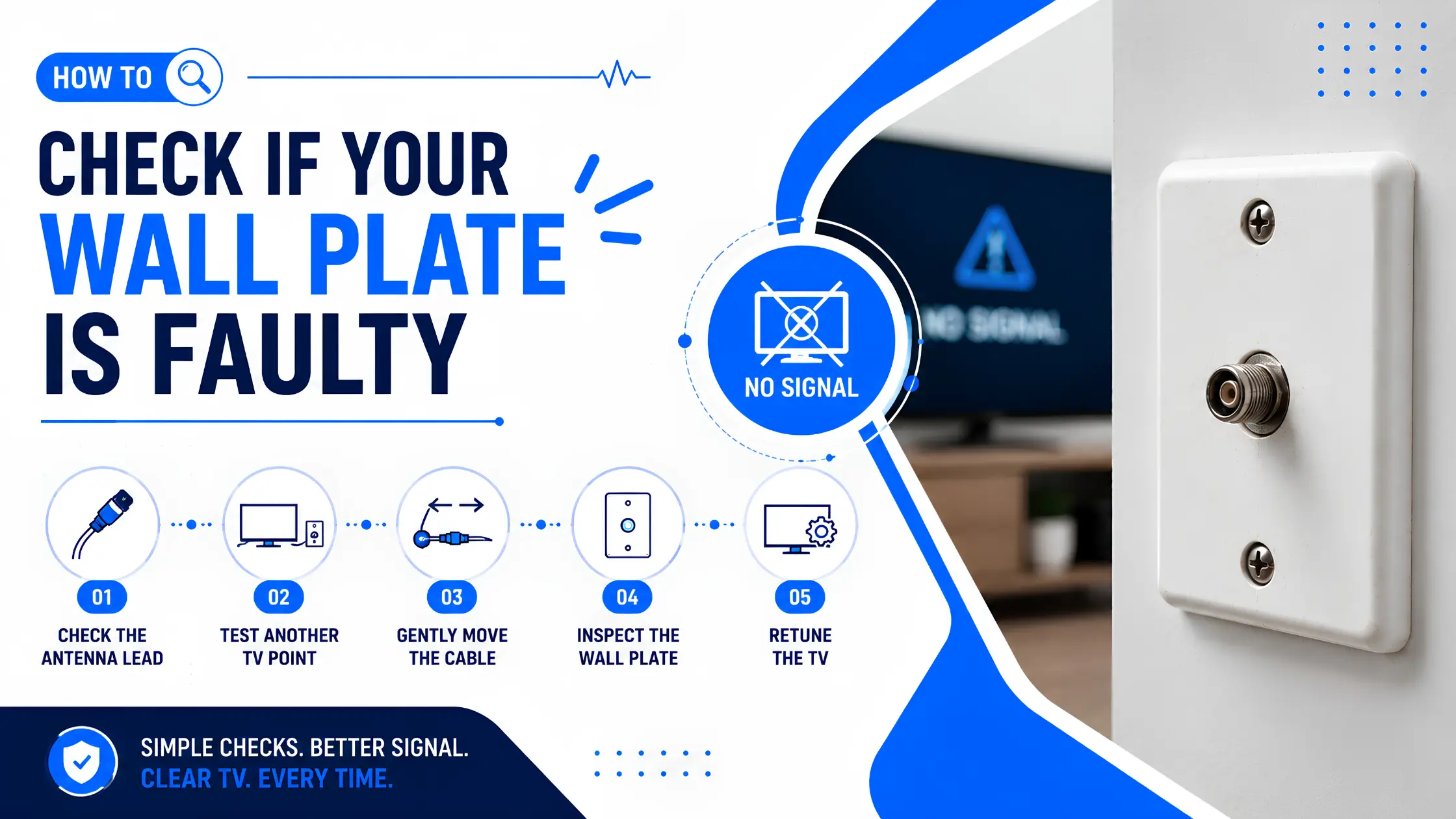
Before booking a technician, there are several safe checks you can perform.
Step 1: Check the Antenna Lead
Inspect the cable connecting the TV to the wall plate. Look for bent pins, loose connectors, or visible damage.
Step 2: Test Another TV Point
If your home has multiple antenna outlets, connect the television to another wall plate. If reception improves, the original wall plate may be faulty.
Step 3: Gently Move the Cable
Carefully move the antenna lead where it connects to the wall plate. If reception cuts in and out, the connection may be loose.
Step 4: Inspect the Wall Plate
Look for cracks, corrosion, loose screws, or physical damage.
Step 5: Retune the TV
Run a channel scan to eliminate any tuning-related issues.
Troubleshooting Checklist
| Symptom | Possible Cause | Recommended Action |
| No Signal on all channels | Loose wall plate connection | Check connections |
| Pixelation and freezing | Poor connector contact | Inspect wall plate |
| Reception comes and goes | Intermittent fault | Test another outlet |
| One room affected only | Faulty wall plate | Replace wall plate |
| No channels found after scan | Signal interruption | Professional testing |
Common Mistakes to Avoid
Many homeowners immediately assume the antenna has failed and overlook simpler causes.
Avoid:
- Replacing the TV before checking connections
- Ignoring a loose wall plate
- Using damaged antenna leads
- Repeatedly retuning the television without investigating the fault
- Assuming all TV points in the home are working correctly
A quick inspection of the wall plate can often save unnecessary expense.
When to Call a Professional TV Antenna Technician
If basic troubleshooting doesn’t restore reception, professional testing may be required.
A qualified technician can measure signal levels, test wall plates, inspect amplifiers, locate hidden cable faults, and identify problems that aren’t visible during a basic inspection.
Many reception issues that appear to be antenna-related are actually caused by internal cabling faults or damaged wall plate connections.
Final Thoughts
A TV wall plate is a small component, but it plays a critical role in delivering a reliable television signal. Before assuming your antenna or television is faulty, take a few minutes to inspect the wall plate and antenna connections. In many cases, a simple repair or replacement can quickly resolve a frustrating TV no signal problem.
If you’ve checked the basics and reception issues continue, contact a qualified TV antenna technician to properly test the system and restore reliable TV reception.